Neighbouring Countries
Defining an Economic Strategy
National Value Proposition
- What is the unique value proposition of the nation or region given its location, legacy, existing strengths, and potential strengths?
- What roles in the neighborhoods, the broader region, and the overall world economy?
- What unique assets as a business location?
- For what types of clusters and activities?
Developing Unique Strengths
- What elements of context and the business environment can be unique strengths?
- What are the existing and emerging clusters?
Achieving and Maintaining Parity with Peers
- What weaknesses must be addressed to achieve parity with peer countries?
Tests of a National Economic Strategy
- Has the country articulated a distinctive position?
- That will create a positive identity for the country?
- That will inspire citizens?
- Does the strategy build on strengths?
- Are the strengths realistic versus neighbors and other peer countries?
- Does the strategy fit with trends in the region and the world economy?
- Is the strategy realistic given the country's weaknesses. Can those weaknesses inconsistent with the strategy be neutralized?
- Are social and political reforms integrated with economic reforms and advanced simultaneously?
- Is there the political will and the political consensus to implement the strategy?
- Do the policy priorities fit the strategy?
- The choice of policies to address
- The sequence in which policies are implemented?
- Has the strategy been communicated clearly to the stakeholders?
- Is the private sector engaged?
- Is government organized around the strategy?
- Is there an overall coordinating structure for economic development?
- Is the quality of governmental agencies and other institutions sufficient for effective implementation?
- Are there mechanisms to measure progress and review / modify the strategy as prosperity improves or conditions change?
Influences on Competitiveness - Multiple Geographic Levels
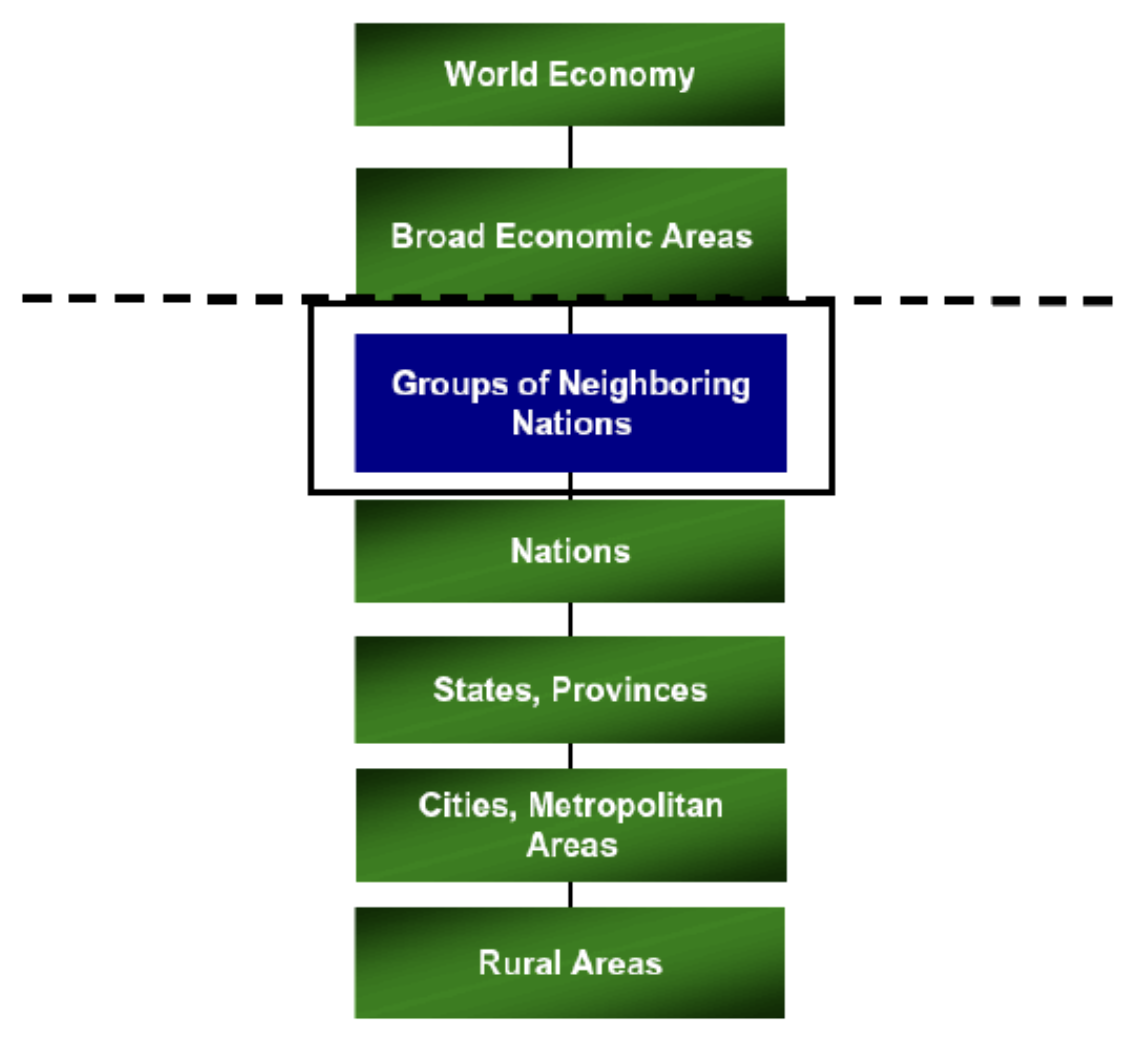
The Mutual Dependence of Nations and Regions
- A nation’s most natural trade and investment partners are its neighbors
- Proximity and similarity of needs allow trade and investment in more parts of the economy
- Nations can grow in those areas where they have unique strengths
- A nation’s economic growth and prosperity can be greatly enhanced by a healthy regional economy
- Larger, accessible markets for local firms (exports and foreign investment)
- Each nation becomes far more attractive as a place to invest
- Nations will inevitably suffer if they are isolated or islands amid countries that are not prospering
- A nation’s competitiveness can be greatly enhanced by regional coordination versus unilateral action
But:
- National sovereignty remains important but competitiveness is often more readily achieved and sustained in moderately sized, competing economic units
Competitiveness and the Neighborhood
- Opens trade and investment among neighbors
- Expands the available market for each country
- The natural path of internationalization for local firms is the neighborhood
- Open trade and investment make each country a more attractive location for investment
- Drives improvements in the business environment
- Captures synergies in policy and infrastructure
- Harnesses improvements in clusters that cross borders
- Gains greater clout in international negotiations
- Helps overcome domestic political and economic barriers to reform
Cross-National Economic Strategy
| The region as a free trade zone or customs union | Countries unite into a “United States” of the region |
| Advantages Gains from internal trade and investment Economies of scale in performing some collective functions | Advantages Gains from internal trade and investment Economies of scale in performing some collective functions |
| Disadvantages Artificial trade diversion within the region due to asymmetric tariffs can lower productivity Regional trade blocs can increase protectionism vs. outside countries and slow multilateral market opening | Disadvantages Difficulty of achieving harmonization on divisive social issues Loss of local initiative, sovereignty, and control over economic destiny Achieving a “United States” often involves cross-subsidization that works against productivity |
Models of Regional Economic Cooperation
| Traditional Model | Broader Model |
| Market Opening | Competitiveness Upgrading |
| Countries create free trade areas, customs unions, or common markets | Opening trade and investment is accomplished by regional cooperation on multiple dimensions of competitiveness |
Capturing Synergies - Economic Integration Among Neighbors
| Factor (Input) Conditions | Context for Strategy and Rivalry | Demand Conditions | Related and Supporting Industries | Macroeconomic Competitiveness |
| Improving the efficiency of the regional transportation network Creating an efficient energy network Enhancing regional communications and connectivity Harmonizing administrative requirements for businesses Linking financial markets Facilitating the movement of students for higher education | Eliminating trade and investment barriers within the region Simplifying and harmonizing cross-border regulations and paperwork Opening up rivalry in each country Coordinating anti-monopoly and fair competition policies Harmonizing IP protection | Opening government procurement within the region Harmonizing environmental standards Harmonizing product quality, safety, and technical standards Establishing reciprocal consumer protection laws | Facilitating cross-border cluster development e.g., Supplier networks Efficient transport and logistics Quality standards | Coordinating macroeconomic policies Coordinating programs to improve security and public safety |
Complementary Benefits of Cross-National Economic Integration
| Developing Countries | Advanced Countries |
| Illustrative Benefits | Illustrative Benefits |
| Inflow of skills and technology via FDI Access to international markets and distribution channels Exposure to sophisticated demand Competitive pressure to upgrade operational effectiveness | Access to larger market for services Efficient specialization along the value chain |
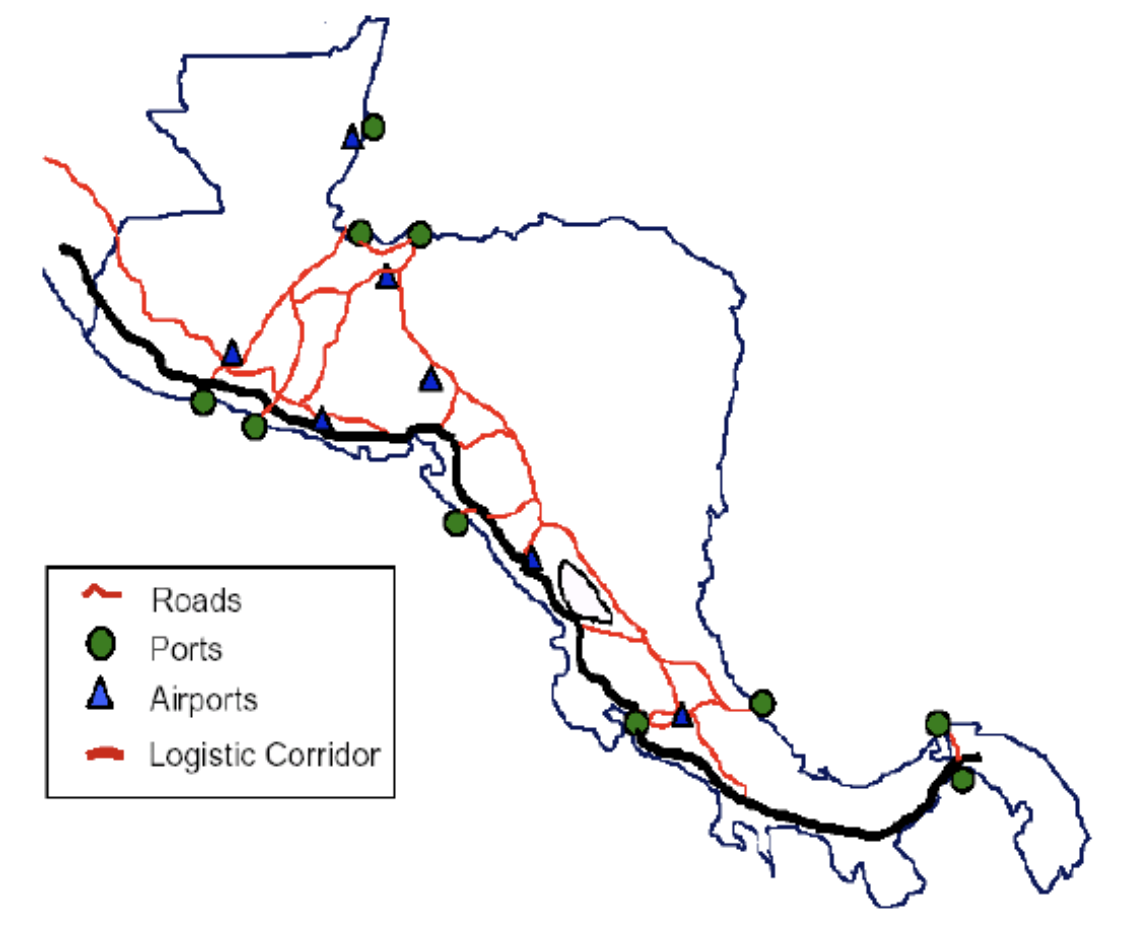
Competitiveness in Central America - Logistical Corridor
Regional Strategy in the Middle East - Gulf Cooperation Council (GCC)

Cross Border Economic Cooperation at Different Levels
| Neighboring Countries | Wider Regions (e.g., Arab League) | World Community (e.g., WTO) |
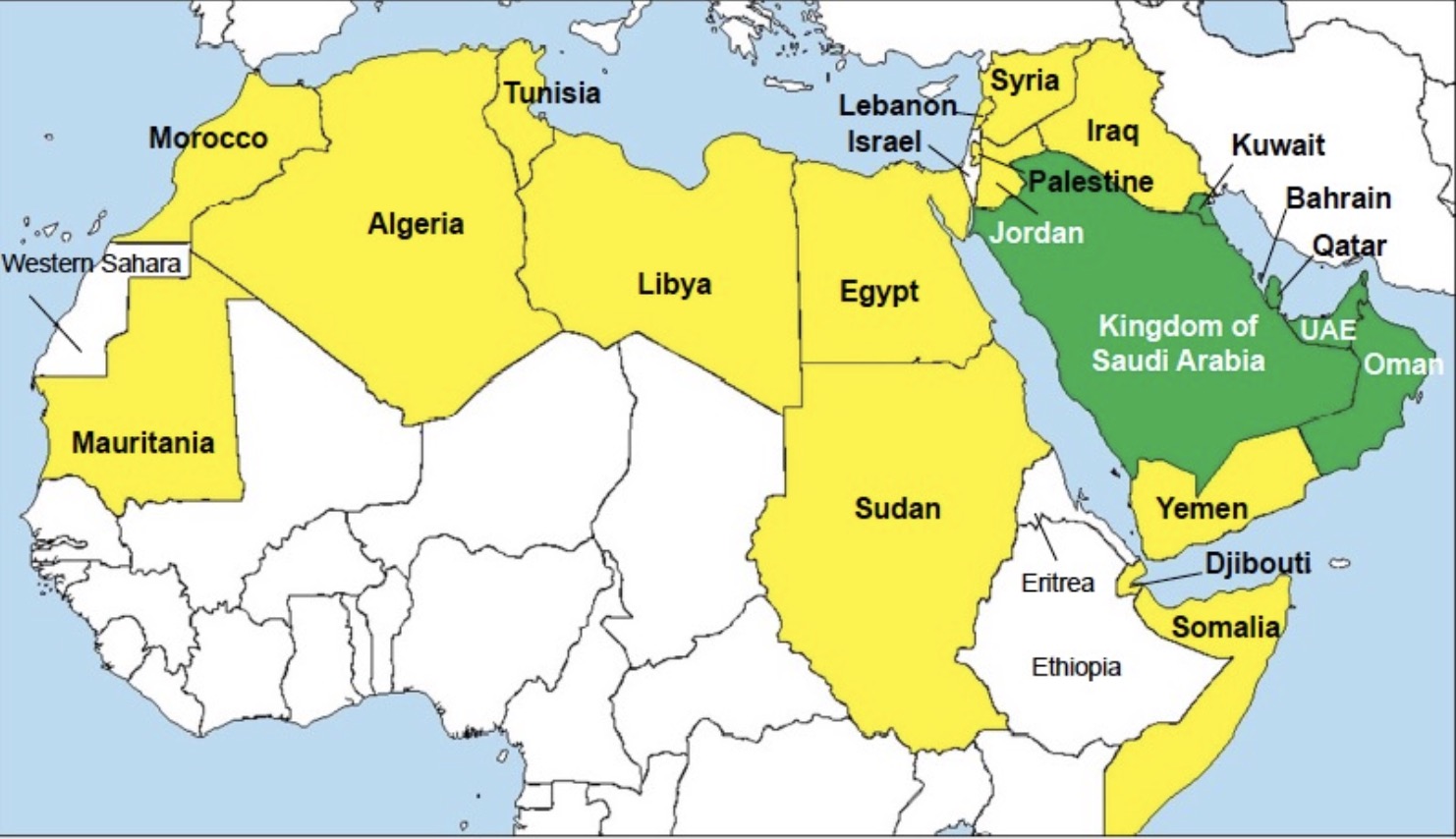
Regional Groupings in the Middle East - The Arab League
https://subnational.doingbusiness.org/en/data/exploretopics/trading-across-borders/why-matters
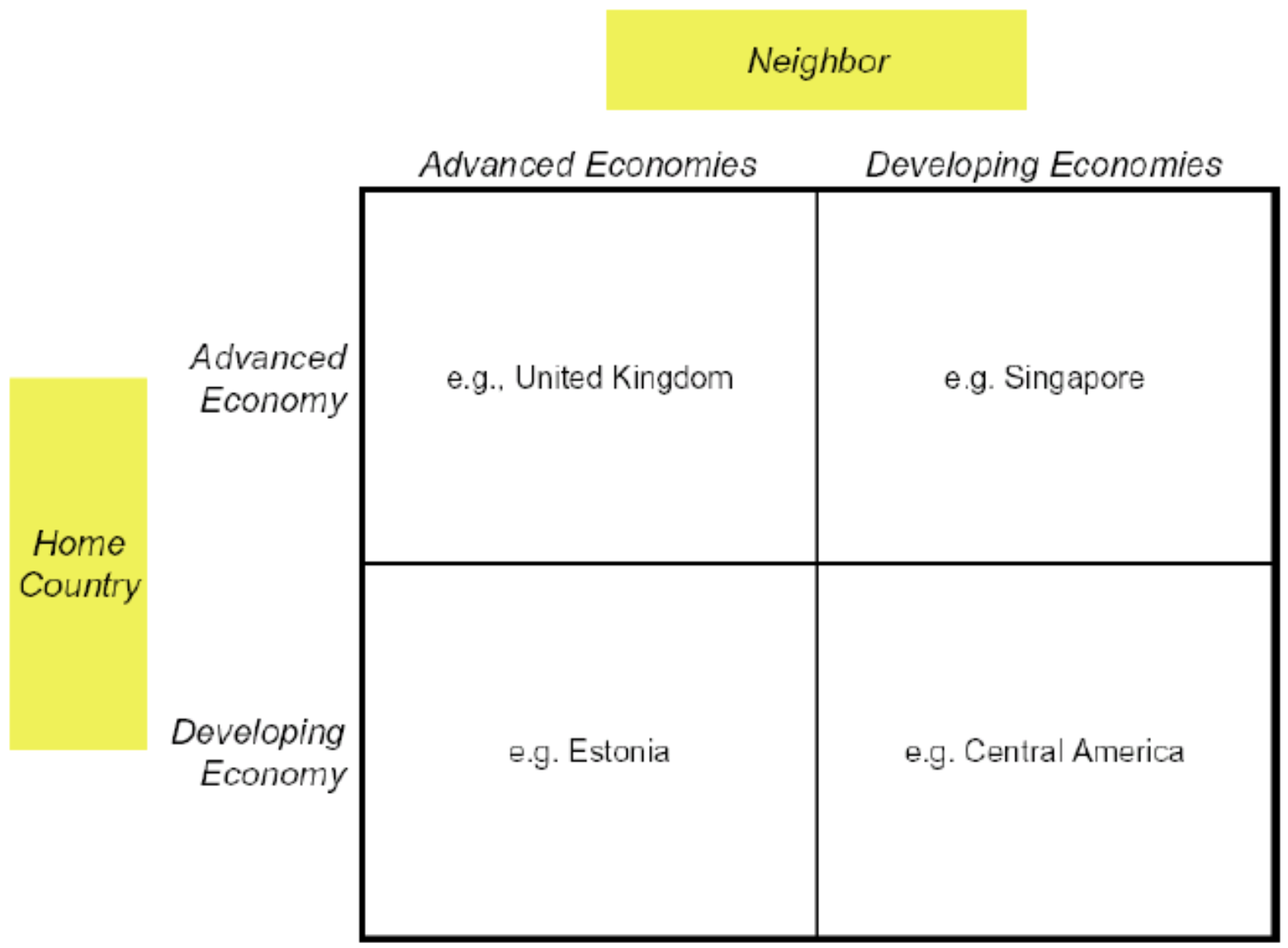
Neighborhood Effects and Types of Neighbors
Cross-National Economic Coordination - Breadth of Regional Focus
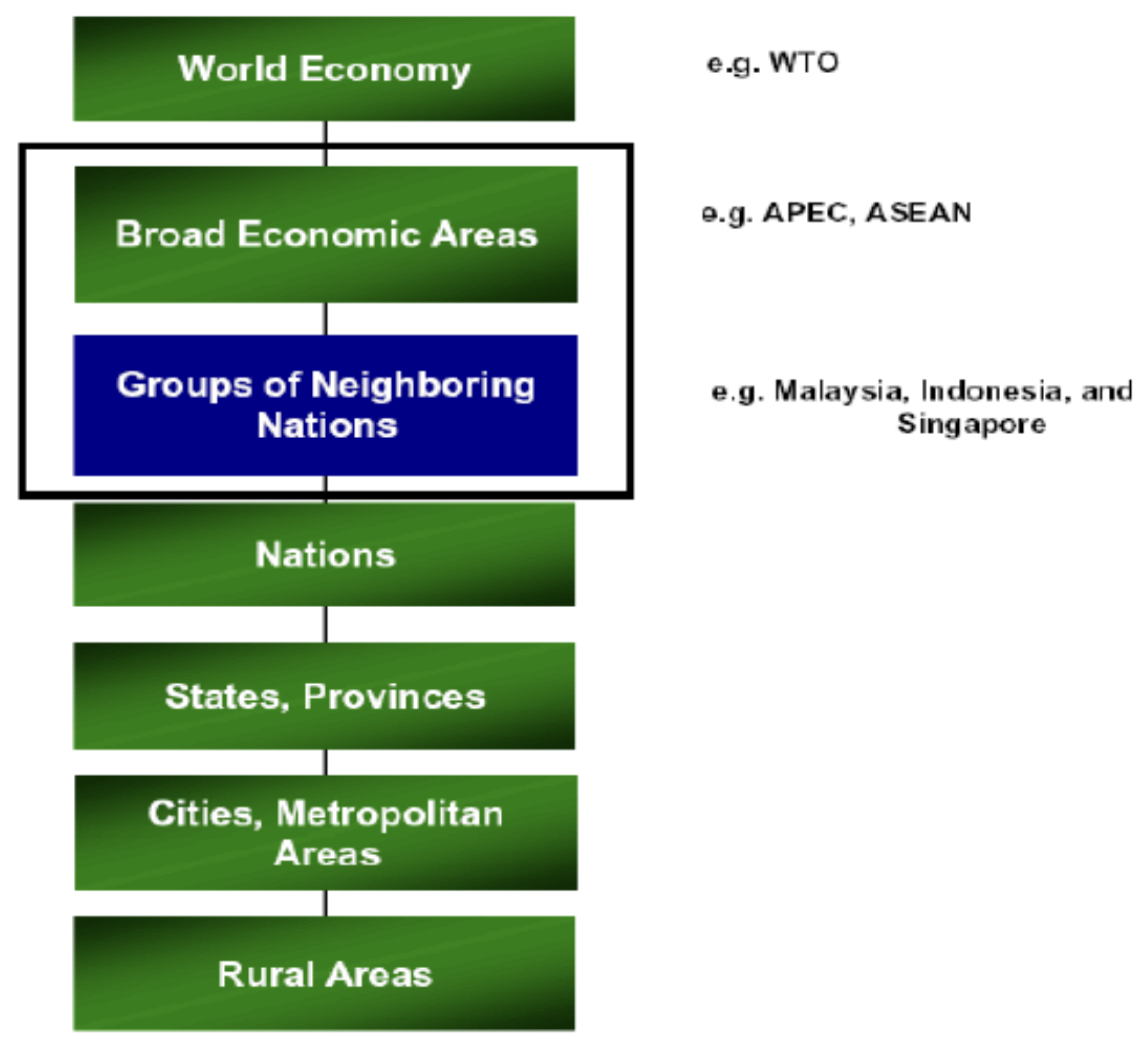
Pitfalls in Regional Coordination
- An overly broad set of countries
- An overly broad agenda
- Focus on politics versus economics; form versus substance
- Bureaucratization and complexity
- Lack of a concrete legal, funding, decision-making, and implementation structure
- Lack of involvement by top national leaders
- Weak political institutions at the national level
- Foreign aid is traditionally organized by recipient country, creating challenges for cross-national programs
- History of conflicts, in part because of the colonial legacy that defined borders cutting across ethnic and economic regions