Competitiveness
What is Competitiveness?
A nation or region is competitive to the extent that firms operating there are able to compete successfully in the national and global economy while maintaining or improving wages and living standards for the average citizen.
Competitiveness depends on the long-run productivity of a location as a place to do business
Supporting existing firms and workers
Enabling high participation of citizens in the workforce
Competitiveness is not:
- Low wages
- A weak currency
- Jobs per se
Successful economic development depends on improving competitiveness
Competitiveness Indicators and Enablers
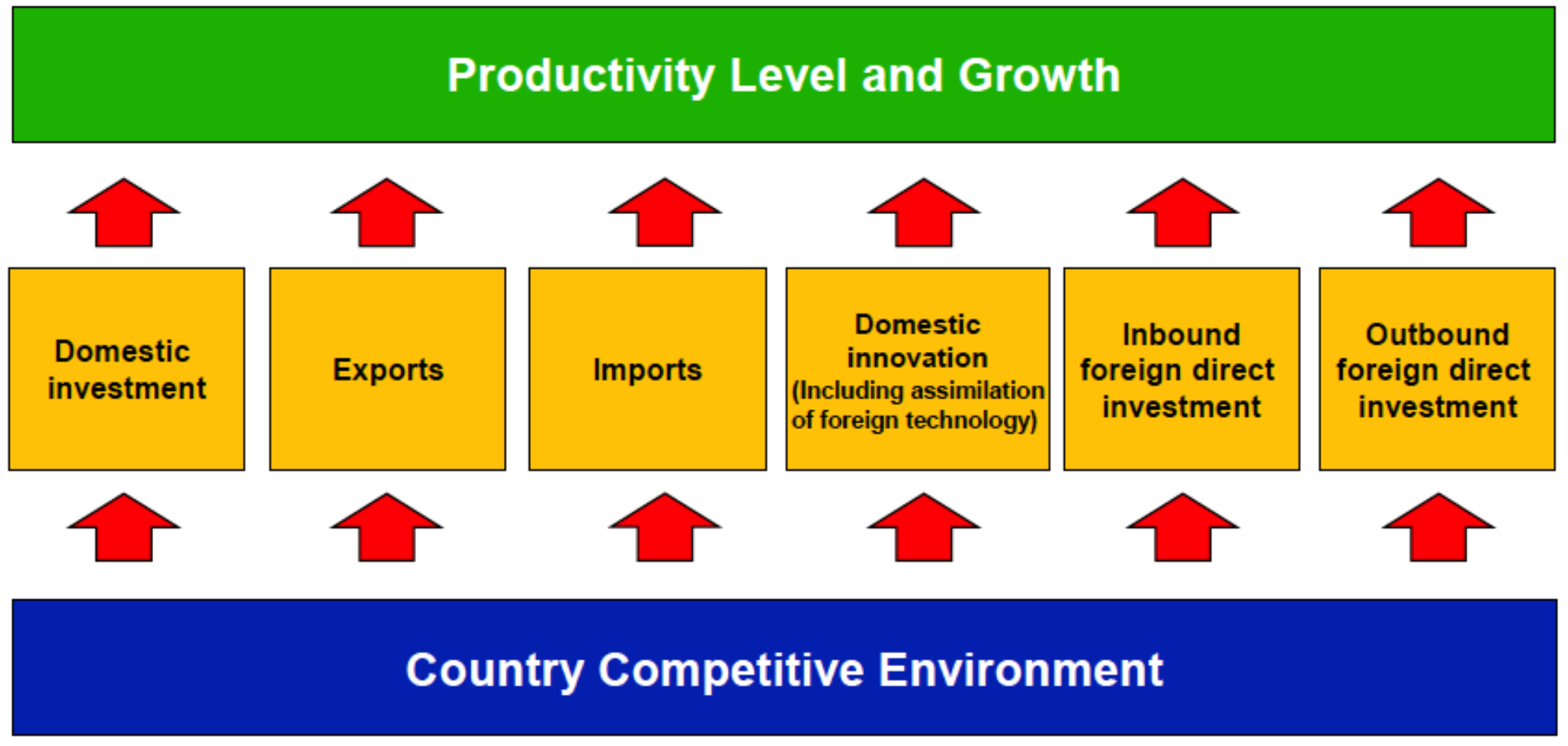
What Causes Competitiveness?
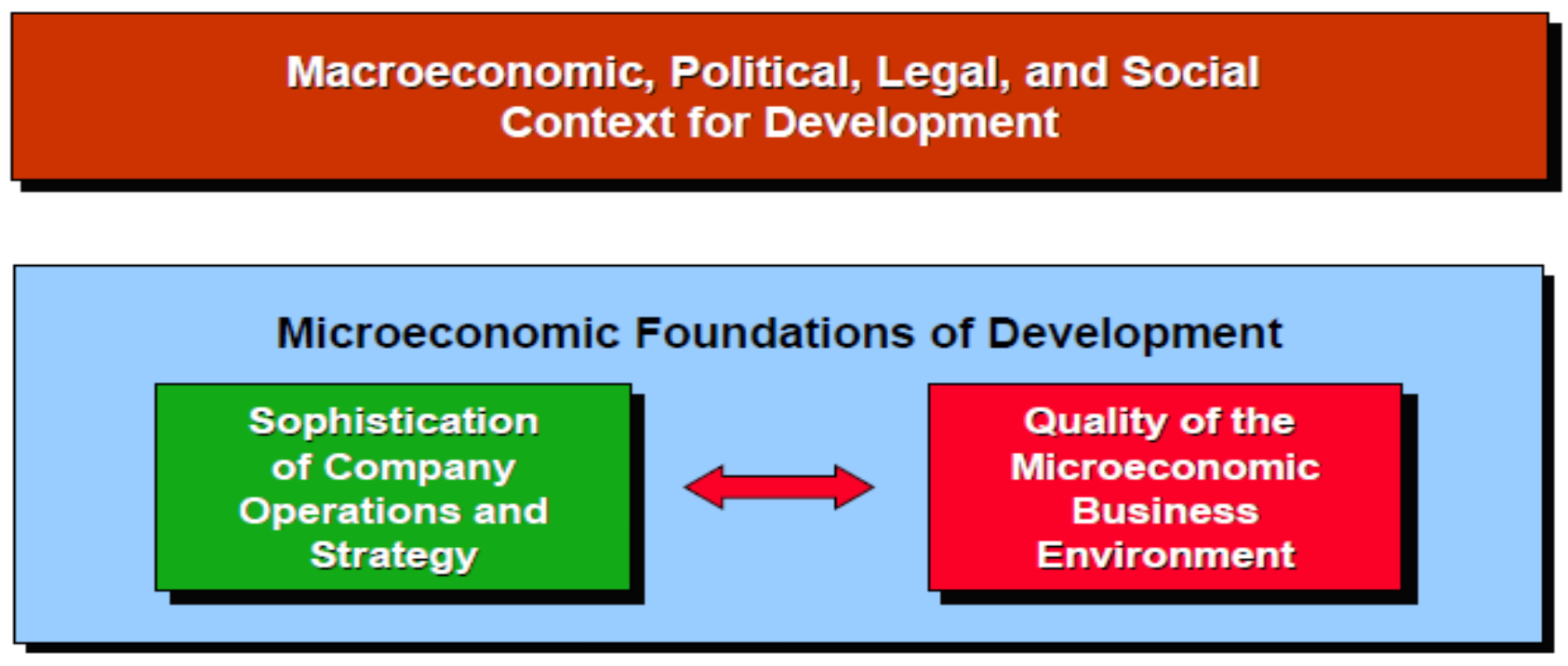
- A sound macroeconomic, political, legal, and social context creates the potential for competitiveness, but is not sufficient
- Competitiveness ultimately depends on improving the microeconomic capability of the economy and the sophistication of local companies and local competition
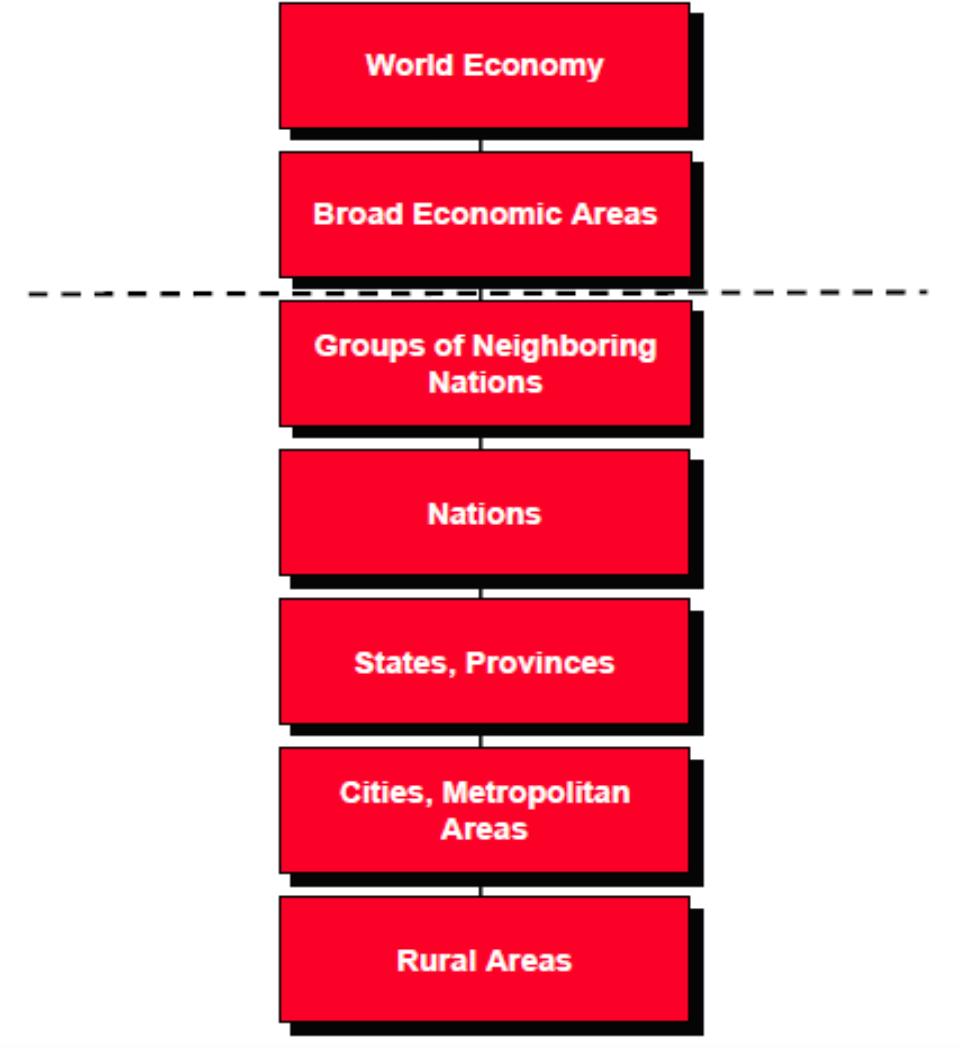
Influence on Competitiveness
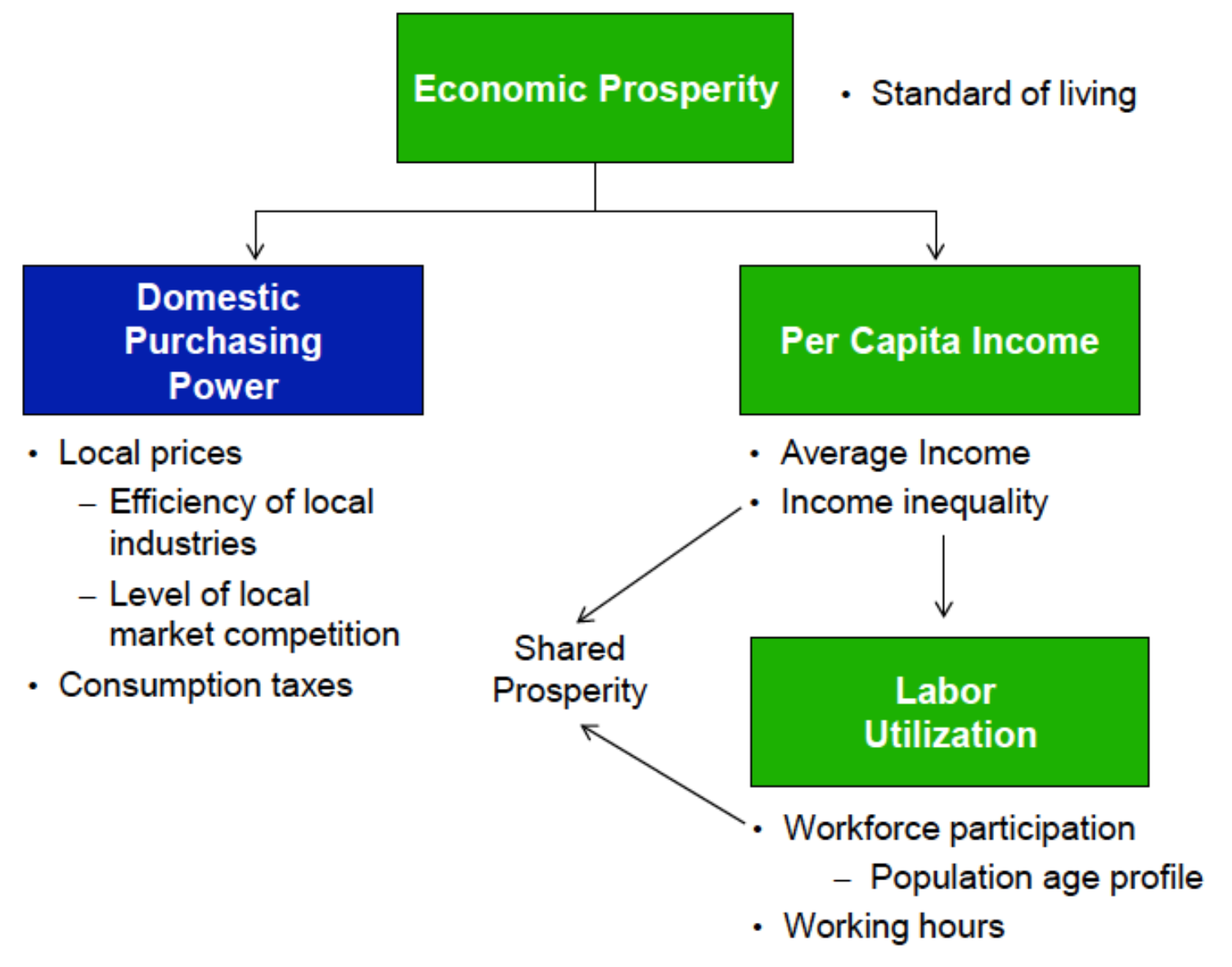
Decomposing Economic Prosperity
Sources of Prosperity
| Inherited Prosperity | Created Prosperity |
| Prosperity is derived from selling inherited natural resources or real estate Prosperity is limited by the amount of natural resources available, and ultimately temporary Focus gravitates towards the distribution of wealth as interest groups seek a bigger share Government is the central actor in the economy as the owner and distributor of wealth | Prosperity is derived from creating valuable products and services Prosperity is created by firms Prosperity is unlimited, based only by the inventiveness and productivity of companies in the economy Creating the conditions for productivity and innovation are the central policy question Companies are the central actors in the economy The government’s role is to create the enabling conditions |
Innovation and the Standard of Living
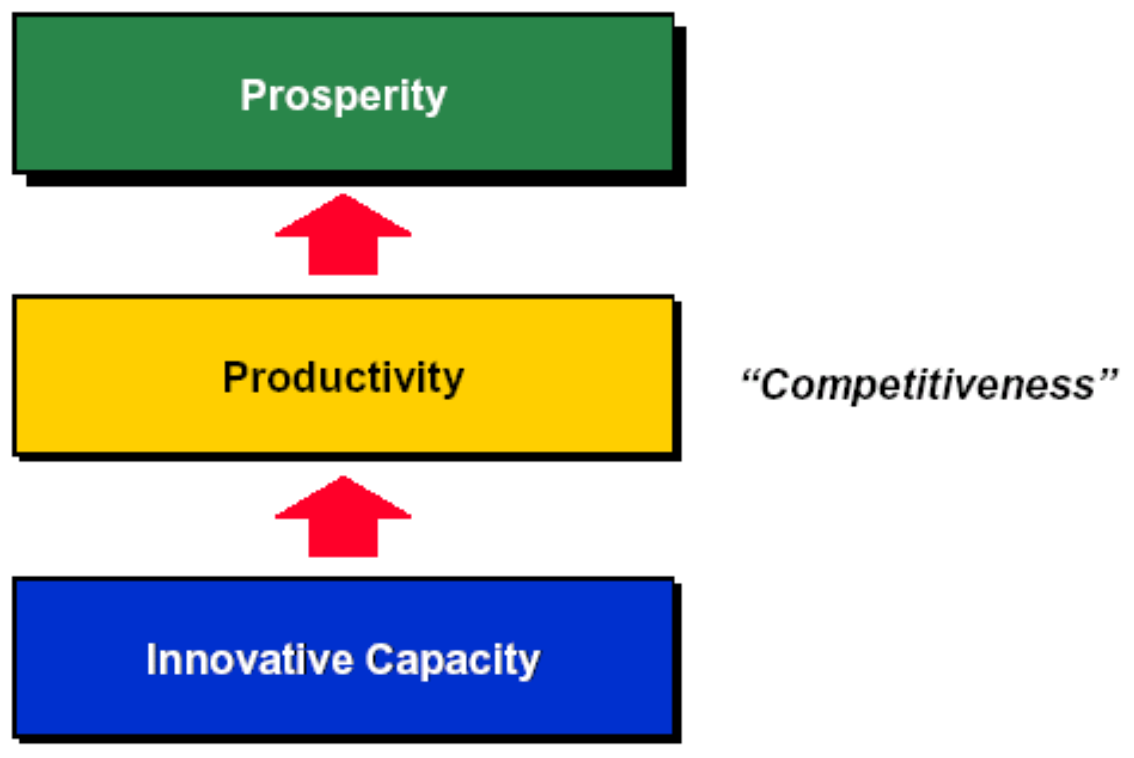
Innovation is more than just scientific discovery
There are no low-tech industries, only low tech firms
Shaping Industry Structure
| Two models | |
| Re-dividing the Pie | Expanding the Pie |
| Shifting the division of value (profits) between incumbents and other players (buyers, suppliers, substitutes, and potential entrants) | Expanding the size of the overall pool of value created by the industry |
| ↓ Companies can sometimes pursue both simultaneously | |
Determinants of Relative ROIC Performance
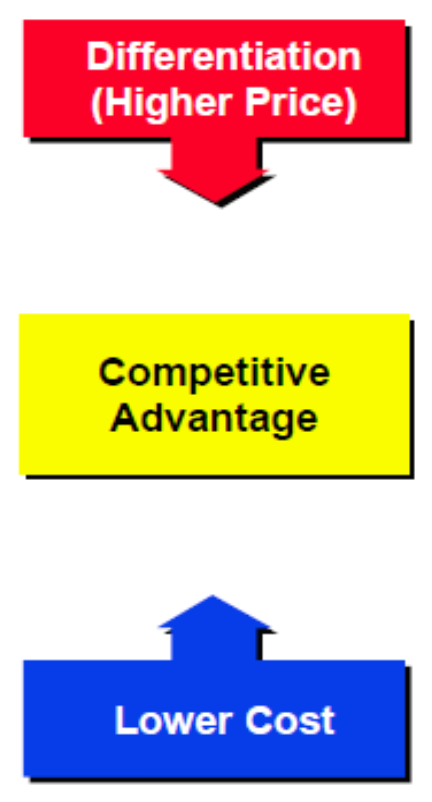
- Successful economic development requires shifting competition in a country or region from low input costs to competing based on productivity
How Managers Think About Competition

- The worst error in strategy is to compete with rivals on the same dimensions
Five Tests of a Good Strategy
- A unique value proposition compared to other organizations
- A different, tailored value chain
- Clear tradeoffs, and choosing what not to do
- Activities in the value chain that fit together and reinforce each other
- Strategic continuity with continual improvement in realization
Strategic Positioning
| IKEA, Sweden | |
| Value Proposition | Distinctive Activities |
| Young, first time, or price-sensitive buyers who want stylish, space efficient and scalable furniture and accessories at very low price points. | Modular, ready-to-assemble, easy to package designs In-house design of all products Wide range of styles displayed in huge warehouse stores with large on-site inventories Self-selection Extensive customer information in the form of catalogs, assembly ticketing, do-it-yourself assembly instructions Idea designer names attached to related products to inform coordinated purchases Long hours of operation Suburban locations with large parking lots On-site, low-cost, restaurants Child-care provided in the stores Self-delivery by most customers |
Achieving Advantage
| Operational Effectiveness is Not Strategy | |
| Operational Effectiveness | Strategic Positioning |
| Assimilating, attaining, and extending best practices Do the same thing better | Creating a unique and sustainable competitive position Do things differently to achieve a different purpose |
Perspective on Firm Success
| Internal | External |
| Competitive advantage resides inside a company or in its industry Competitive success depends primarily on company choices | Competitive advantage (or disadvantage) resides partly in the locations at which a company’s business units are based Cluster participation is an important contributor to competitiveness Company choices and the ability to implement them are affected by location |