Globalization and the knowledge economy have repositioned cities as drivers of national economies
1925: 25% of the world population will live in cities
2030: 17 of the world’s 25 largest cities will be in coastal regions in Asia
2055: 75% of the world population will live in cities
Global economy and international cities
World is changing fast. Different trends are affecting cities and fostering a new age of urbanizations and metropolitanization
To succeed cities must adjust (and need to be): open, integrated, diverse, connected, skilful, innovative, investable, attractive, sustainable, stable and safe
This requires investments, strong coordination of programs and policies, effective tools for intervention: cities need partnerships with global corporations and small businesses to achieve this in order to create opportunities for business growth
What are international cities?
An international city is a city deemed to be an important node point in the global economic system. They are also known as global cities, world cities or alpha cities.
It is rooted in the principle of globalization according to a hierarchy of importance to the operation of the global system of finance and trade.
The most complex of these entities is the “global city”, whereby the linkages binding a city have a direct and tangible effect on global affairs through socio-economic means.
Characteristics of international cities
Economic
Host banking and financial services’ clusters
Significant financial capacity and presence of stock exchange that can influence the world economy
Their business environment is mainly based on large corporations and companies’ HQs
Cost of living
Political
Active influence on domestic and international affairs
A metropolitan area
Host international organizations (mainly HQs)
Social & cultural characteristics
Diverse demographic constituencies
Quality of life standards
Degree of social capital and city development
Active role of educational institutions
Influential media outlets
Strong art & culture heritage
Infrastructure
Advanced physical infrastructure: transport system, airport, seaports
Advanced communication infrastructure
Health facilities
Prominent skylines/skyscrapers
Ranking international cities
Some selected indexes:
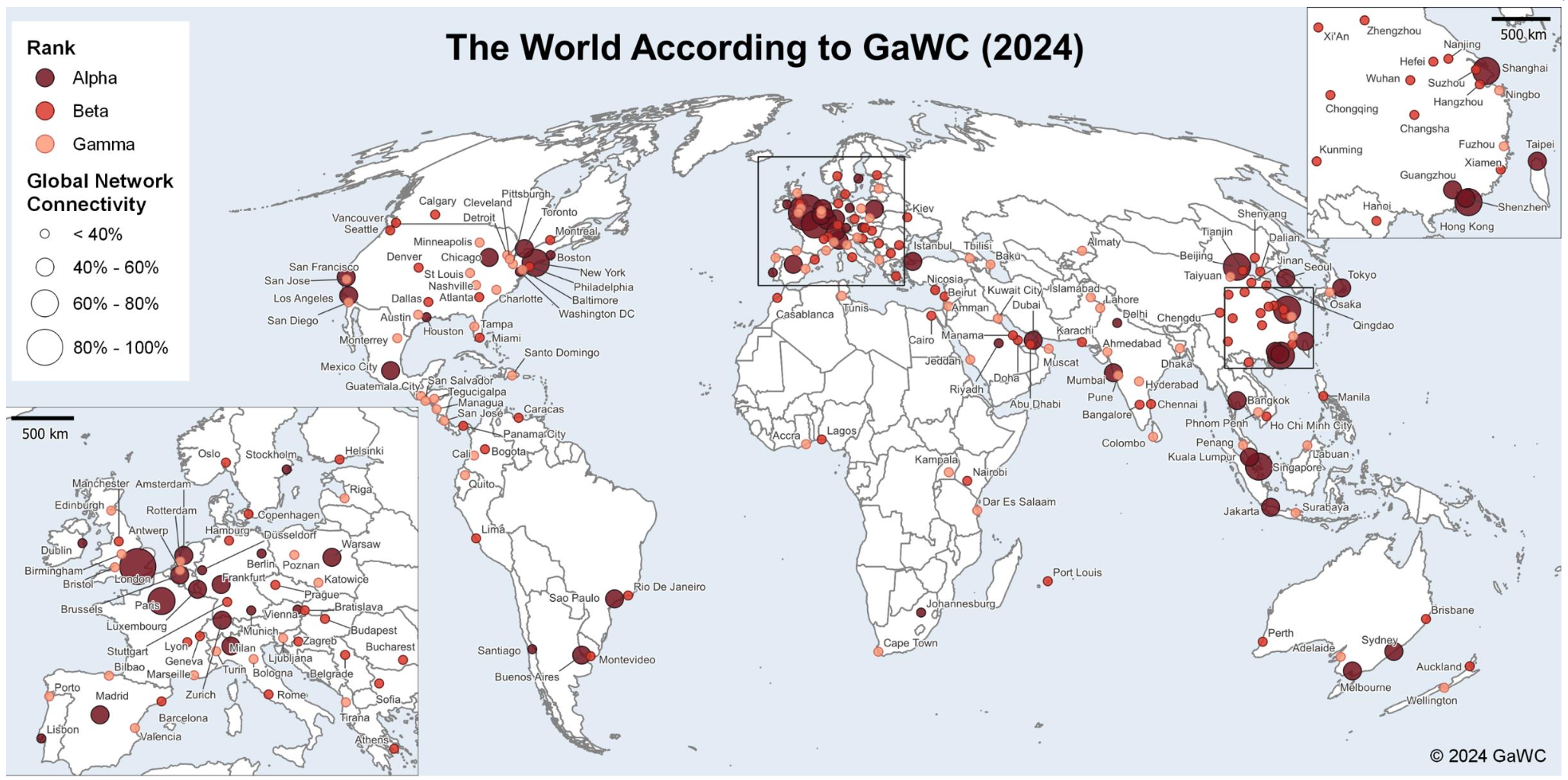
GaWC: Globalization and World Cities
John Lang LaSalle World Winning Cities
European Cities Monitor
S&P Credit Ratings
Anholt GMI Index: cities’ brand and reputation
Mercer Quality of living; Cost of living
The Climate Group: Low Carbon Leaders
Cities are assessed in terms of their advanced producer services using GaWC's interlocking network model. Indirect measures of flows are derived to compute a city's network connectivity, which measures a city's integration into the world city network.
The connectivity measures are used to classify cities into levels of world city network integration. These levels are interpreted as follows:
Alpha++ cities: In all analyses, London and New York stand out as clearly more integrated than all other cities and constitute their own high level of integration.
Alpha+ cities: Other highly integrated cities that complement London and New York, largely filling in advanced service needs for Pacific Asia.
Alpha & alpha- cities: Very important world cities that link major economic regions and states into the world economy.
Beta level cities: These are important world cities that are instrumental in linking their region or state into the world economy.
Gamma level cities: These can be world cities linking smaller regions or states into the world economy, or important world cities whose major global capacity is not in advanced producer services.
Cities with sufficiency of services: These are cities that are not world cities as defined here but they have sufficient services so as not to be overly dependent on world cities. Two specialised categories of city are common at this level of integration: smaller capital cities, and traditional centres of manufacturing regions.
Competitiveness is a complex concept, often tied to economic growth and innovation.
It reflects a location’s ability to thrive in comparison with others, driving prosperity.
Competitiveness encompasses more than just financial metrics; it includes social, physical, and institutional resources.
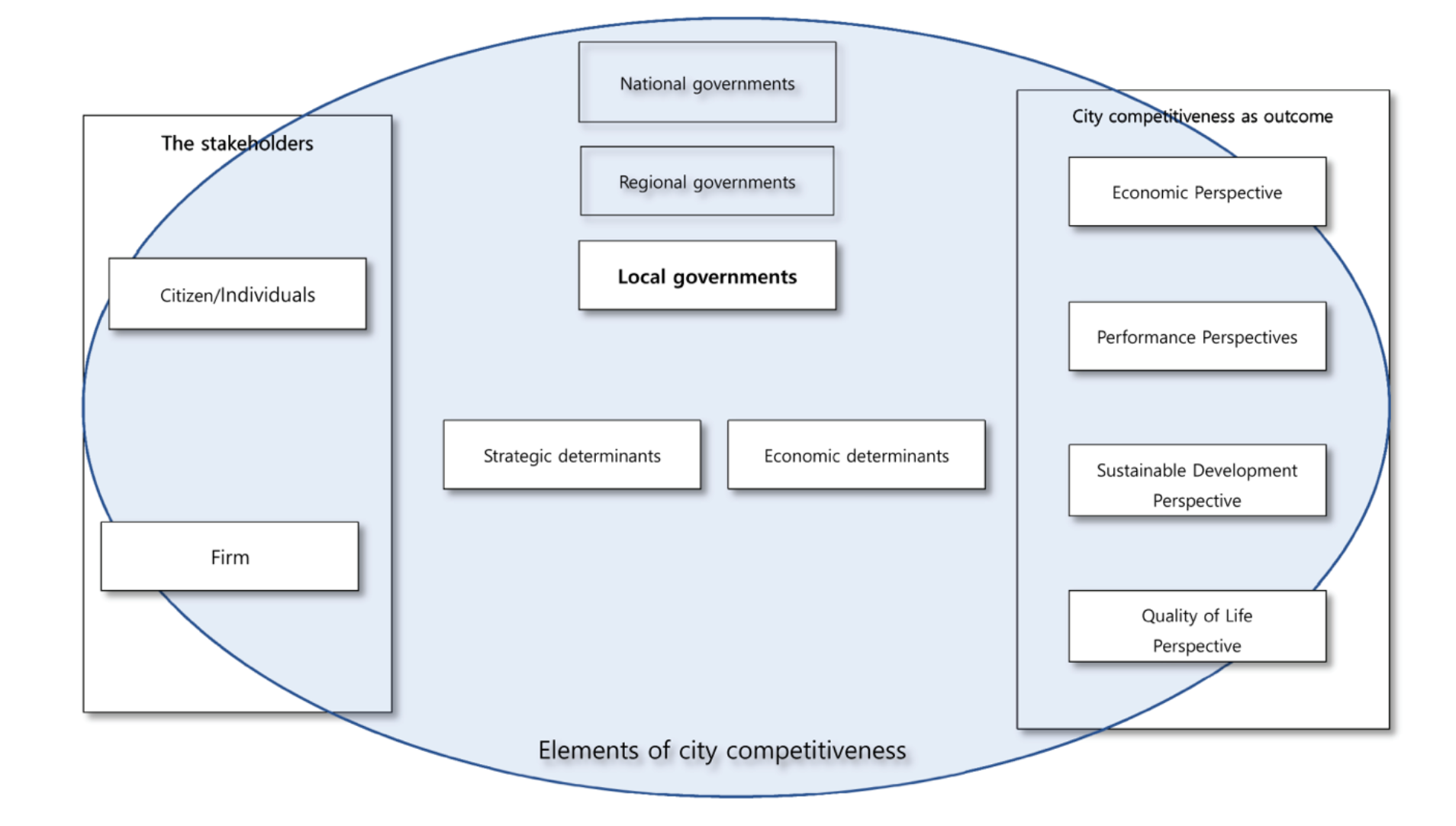
Local governments play a crucial role in shaping the conditions for competitiveness.
Challenges in Defining Competitiveness
Competitiveness has traditionally been associated with private sector values, creating tension in public administration.
Many studies focus on national levels, neglecting vital local government contributions.
The unidimensional view of competitiveness risks overlooking critical social and institutional dynamics.
It is essential to broaden the concept to include local governance and community well-being.
Elements of City Competitiveness
Measuring City Competitiveness
Various methodologies exist for measuring competitiveness, highlighting its multidimensional nature.
Key indicators include economic, social, and environmental factors that contribute to a city's appeal.
Research shows a growing interest in establishing consistent metrics across diverse geographical contexts.
Understanding local needs and resources is fundamental to effective competitiveness measurement.
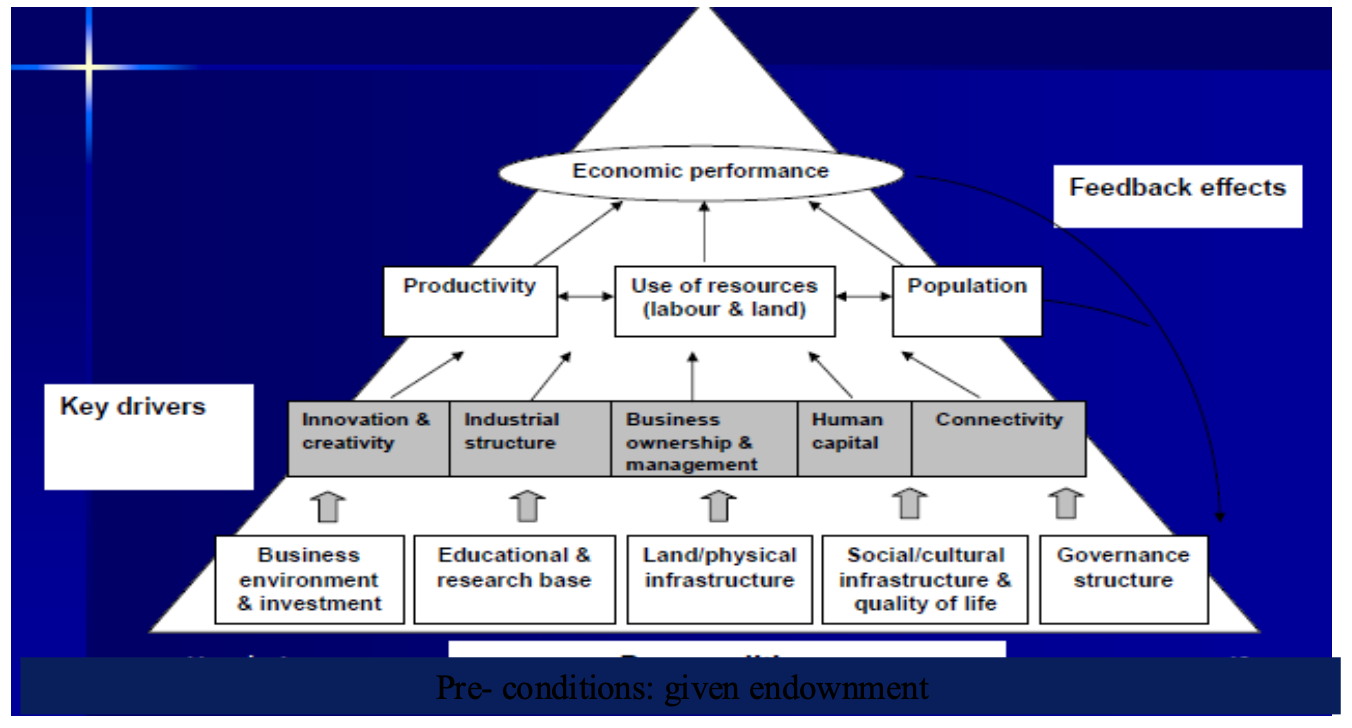
Determinants of performance in international cities
The Role of Local Governments
Local governments are pivotal in cultivating competitive advantages through strategic decisions.
They must leverage relational and social capital to enhance local prosperity.
Engaging with private actors and public administrations is key to fostering competitiveness.
Public administration can directly influence local service quality, affecting overall competitiveness.
Connecting Competitiveness and Citizen Satisfaction
There is a growing recognition of the link between local services and citizen satisfaction.
Competitiveness should also encompass quality of life and public service efficacy.
Research indicates that satisfied citizens contribute to higher local competitiveness.
Understanding this relationship is vital for effective public administration strategies.
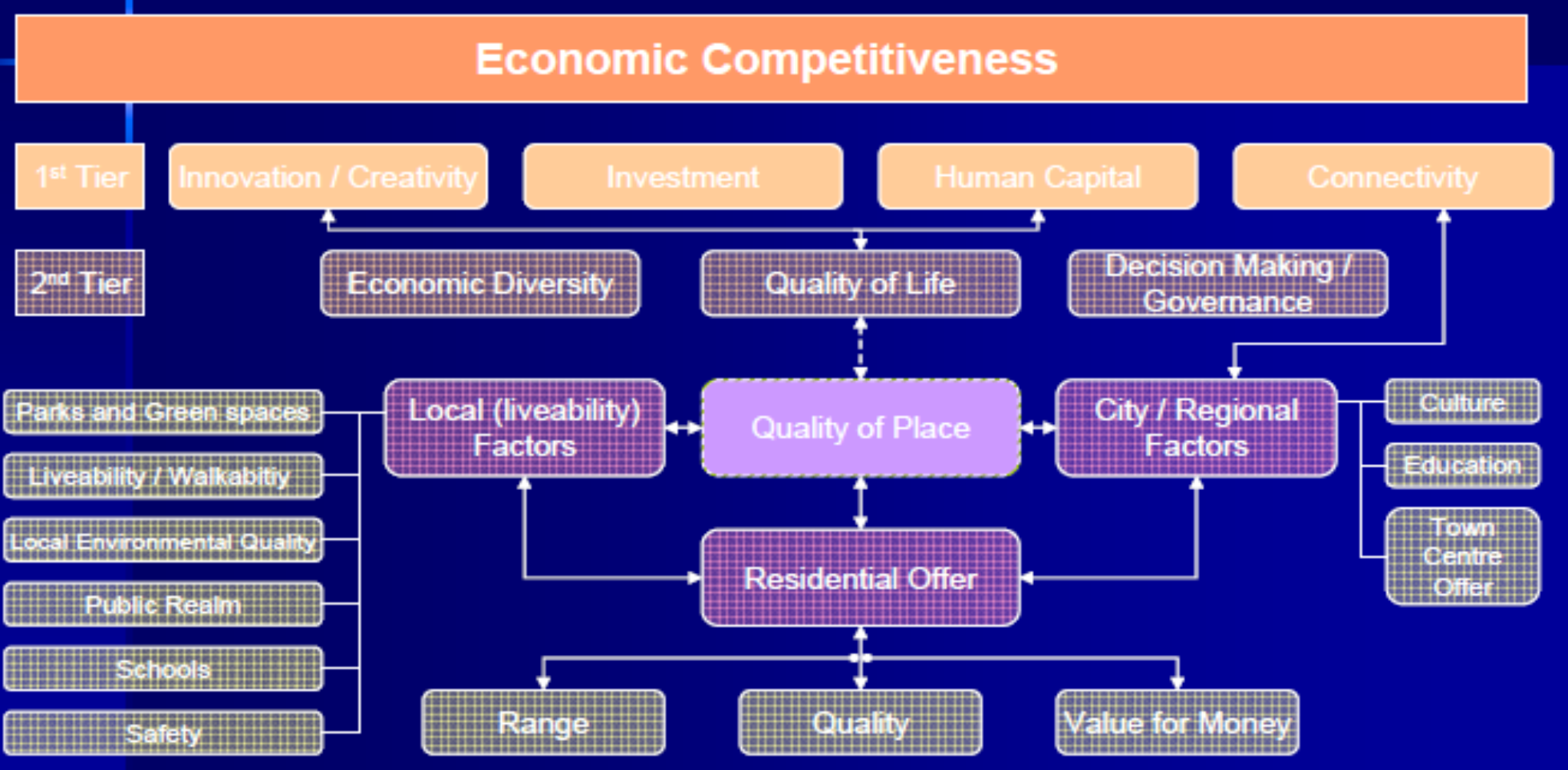
Quality of Place, Happiness, and Competitiveness
Developing unique strengths
Understand unique territorial asset and identity
Strong executive managers in city agencies
At governmental level:
Set strategies for whole city and region and not just for city governments
The role of the leaders
Integrate actions across the city
Structural Constraints and Governance Limits
Rapid growth of metropolitan regions
Investment is not enough
Financial resources are finite and national public finance is slow and follows growth
Formal power and competences less than needed
City governments do not control everything:
- Boundaries
- Competences
- Division of labour with higher/lower tiers
- Markets
- Regulations
National and regional governments guard their own space
International Cities and Competitiveness
Challenges for International Cities
They are key to national economic success ✓ But are not the focus of national economic policies
Globalization happens in bigger cities through institutions and firms that are based there and using metropolitan logistics and infrastructure ✓ They usually provide a high return on public investment
Organizing the economic development of an international city can make a big difference in terms of competitiveness ✓ Cities need their value proposition
How can international cities support competitiveness and development?
Recognizing the presence and relevance of the cluster
Roles of international cities in economic development
Define a distinctive position in the regional and global economy
Determine a unique value proposition (what value? What set of economic activities?) that builds on strengths, not just reduces weaknesses
Build clusters
Facilitate cluster development and upgrading
Enable a process of economic change
Inform the community about competitiveness
Create a governmental structure that facilitates the creation and implementation of economic strategy
Establish a structure involving independent institutions in which governments, the private sector, other institutions and civil society work together in improving competitiveness
The competitive advantage of international cities
Quality of life for knowledge economy
Richer visitor experience
Spur to creativity and innovation
Openness to wider markets, populations and customers
Trade and exchanges with international markets
Levels of entrepreneurship and aspiration
Better corporate relations
Attractiveness for international investments and events