Foreign Direct Investment
FDI in the Global Economy
- The size of FDI flows has increased significantly, especially since the early 1990s
- The number of countries involved in FDI a s sources and destinations has significantly increased, though OECD countries remain by far the leaders on both dimensions
- The number of industries engaged in FDI has broadened. Service sector-companies especially have become more active
FDI is an integral part of the globalization of competition and the global specialization of value chains
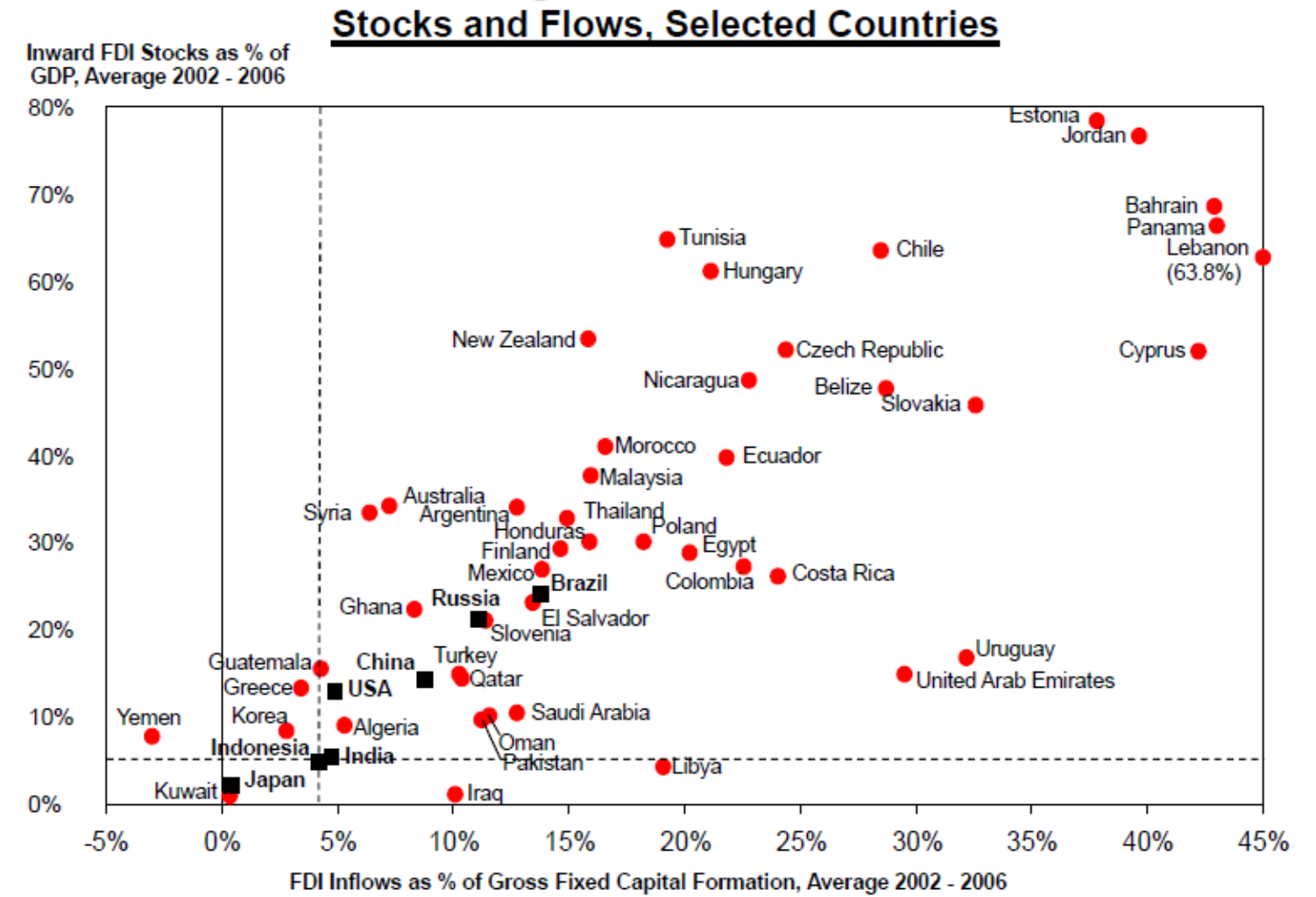
Inbound Foreign Investment Performance
FDI and Competitiveness
- FDI can be a sign of competitiveness of a location
- Implication: Policies that improve competitiveness also tend to increase the attractiveness of a location for FDI
- FDI can improve the competitiveness of the investing company
- Access to locational assets or factor costs
- FDI can enhance the competitiveness of the location through its positive effect on the determinants of productivity
- FDI attraction based on competitiveness principles creates value for both the investor and the investment location
But:
- FDI is not an end in itself. FDI is a tool to enhance competitiveness
- Misguided FDI attraction policies can lead to a pure transfer of wealth to investors, where the benefits provided to the investor outweigh the benefits to the location
- FDI policies can attract companies and jobs that fail to upgrade competitiveness, wages, and prosperity ("race to the bottom")
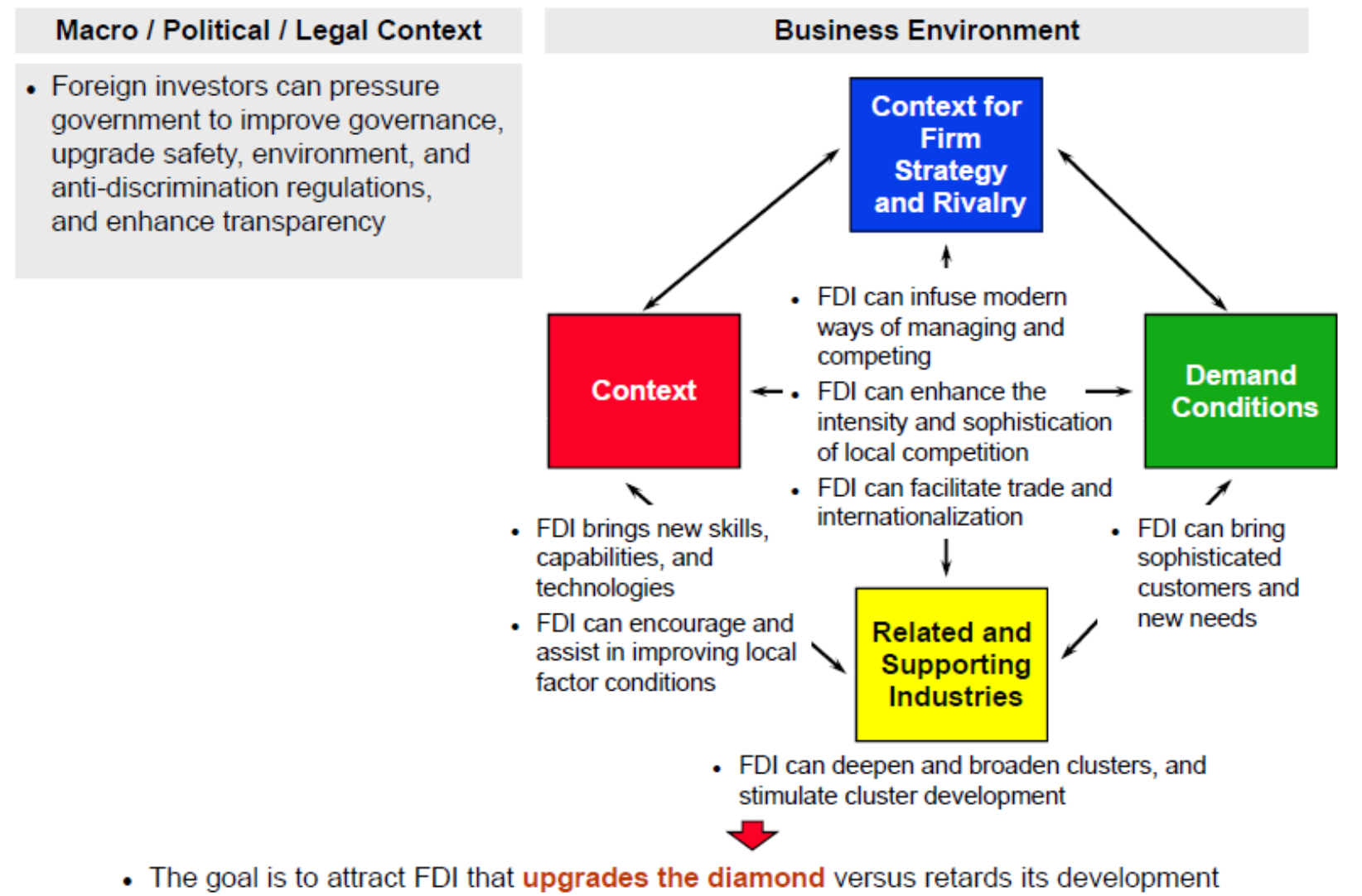
Principles of Investment Attraction
- The goal of FDI attraction is to enhance prosperity through upgrading competitiveness, not the dollars invested or number of jobs per se
- FDI attraction policies should fit the country’s or region’s state of development, economic strategy, and value proposition
- FDI attraction should utilize cluster principles in order to (1) raise the odds of success in attracting companies; (2) create externalities and multiplier effects from each investment; and (3) increase the sustainability of investments over time
- Target investors should be identified based on their fit with the location’s value proposition and cluster portfolio
- Investment attraction activities and incentives should create value for both the location and the investor
- Policies and incentives for FDI attraction should evolve with the location’s state of competitiveness
- Other local entities and institutions such as cluster groups, companies, universities and other public and private sector organizations, should be engaged in support of the investment attraction process
Determinants of FDI
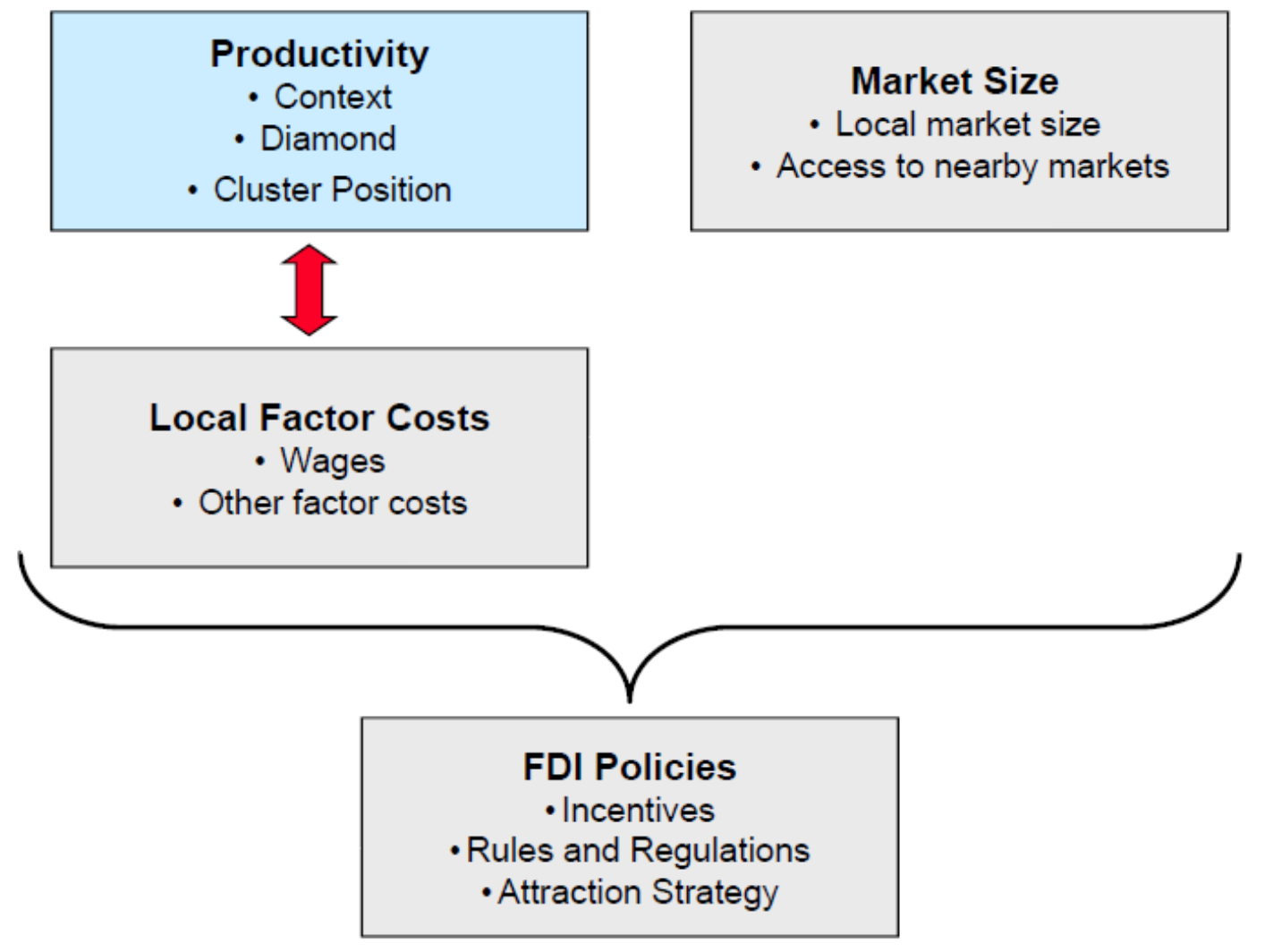
Important Influences on Investment Attraction
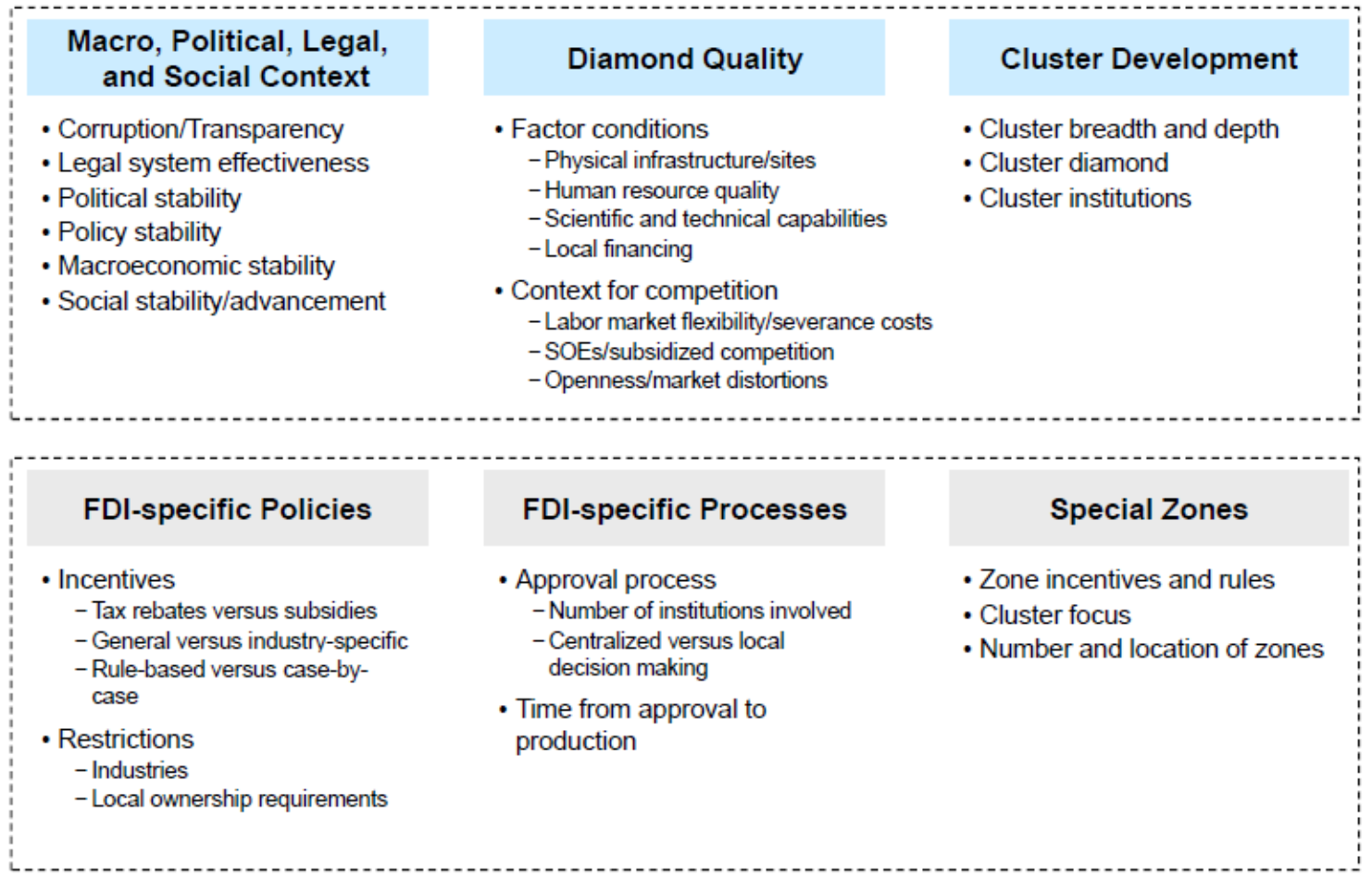
Designing Appropriate Tools and Incentives
- Enhance the ability for investors to achieve higher productivity versus subsidizing input costs
- e.g., Improve the efficiency and quality of the electricity grid instead of subsidizing electricity rates
- Higher productivity improves prosperity, while lowering input costs generates mostly private gains for the investor
- Note, however, that the benefits of lower input costs are often easier for investors to calculate
- Improve the quality of the location in ways that benefit all companies, not just one investor
- e.g., Improve customs procedures instead of giving specific tariff exemptions
- General improvements in the business environment avoid market distortions and raise competitiveness for the entire location
- Invest in incentives that are tied to the location, not the investor
- e.g., Provide developed factory sites instead of granting corporate tax breaks
- e.g., Financing for training programs, not general subsidy payments
- Benefits that are tied to the location will also increase the likelihood that the investor remains in the location
- Fully fungible benefits can be more attractive to some investors. However, the size of incentives is often small relative to the size of the investment, so that long-term improvements in the location can outweigh short-term subsidies
- Provide benefits that are earned over time, not all captured up front
- e.g., provide incentives tied to the total size of the investment including follow-on investments, not a one-time incentive
- Future streams of benefits continue to make the location attractive and can help to attract add-on investments
- Construct incentives that encourage profitability and motivate the investor to upgrade its activities in the country over time
- e.g., offer a tax rate reduction instead of subsidy
- The incentive structure should create the motivation to improve the productivity and scope of the investor's operation in the location
- Compensate investors for making investments needed to improve the business environment when they will be more cost effective in executing them
- e.g., provide matching funds for company R&D or training instead of creating a government lab or educational program
- Such an approach creates financial benefits for investors, helps ensure that upgrading investments are truly beneficial to investors, and leverages investor know-how